A Gardener’s Learning Curve
Gardening is a skill. And as with any skill (including writing), there’s a learning curve.
The first vegetables I grew as an adult were tomatoes. And that was ALL I grew in that first year.
I needed the time to learn how to tend to the soil, how to water the tomato plants properly, how to stake them, how to attract pollinators, when to harvest their fruit and then their seeds, how to prepare the bed for the next year and so on.
I made mistakes. Some plants died. All plants grew…not terrifically. (sheepish grin) The harvest was…underwhelming.
I learned from those mistakes and the following year, the tomato growing went MUCH better.
So much better that I decided to grow green beans also.
And I made mistakes with those plants also.
I learned. I became a better gardener.
I added another type of vegetable to the garden. And the process repeated.
If this was your first year gardening and your harvest was underwhelming or completely nonexistent, know that is normal.
That is expected.
Your mistakes this year will make you a better gardener next year.
(smiles)
Topics: Gardening | Comments Off on A Gardener’s Learning Curve
Many Different Pollinators

This summer, we’ve had SO many bees, hornets and yellowjackets in our little part of the universe.
Every morning, flowers were absolutely covered with them. There were SO many different kinds of bees, ranging from the barely visible to the big ol’ bumblebees.
They were drawn to different types of flowers. And they were all working hard (when they weren’t taken naps), collecting pollen, ensuring seeds were rendered viable and fruit was set.
The bees were flourishing. As is our garden.
(smiles)
Ironically, I have only seen about one or two honeybees this year. If the Dear Wonderful Hubby and I had focused on only attracting them to our gardens, we and our plants would have been out of luck. The other bees saved our harvests.
Attract as many pollinators as you can. You never know who will show up!
Topics: Gardening | Comments Off on Many Different Pollinators
Seed Saving And Sharing

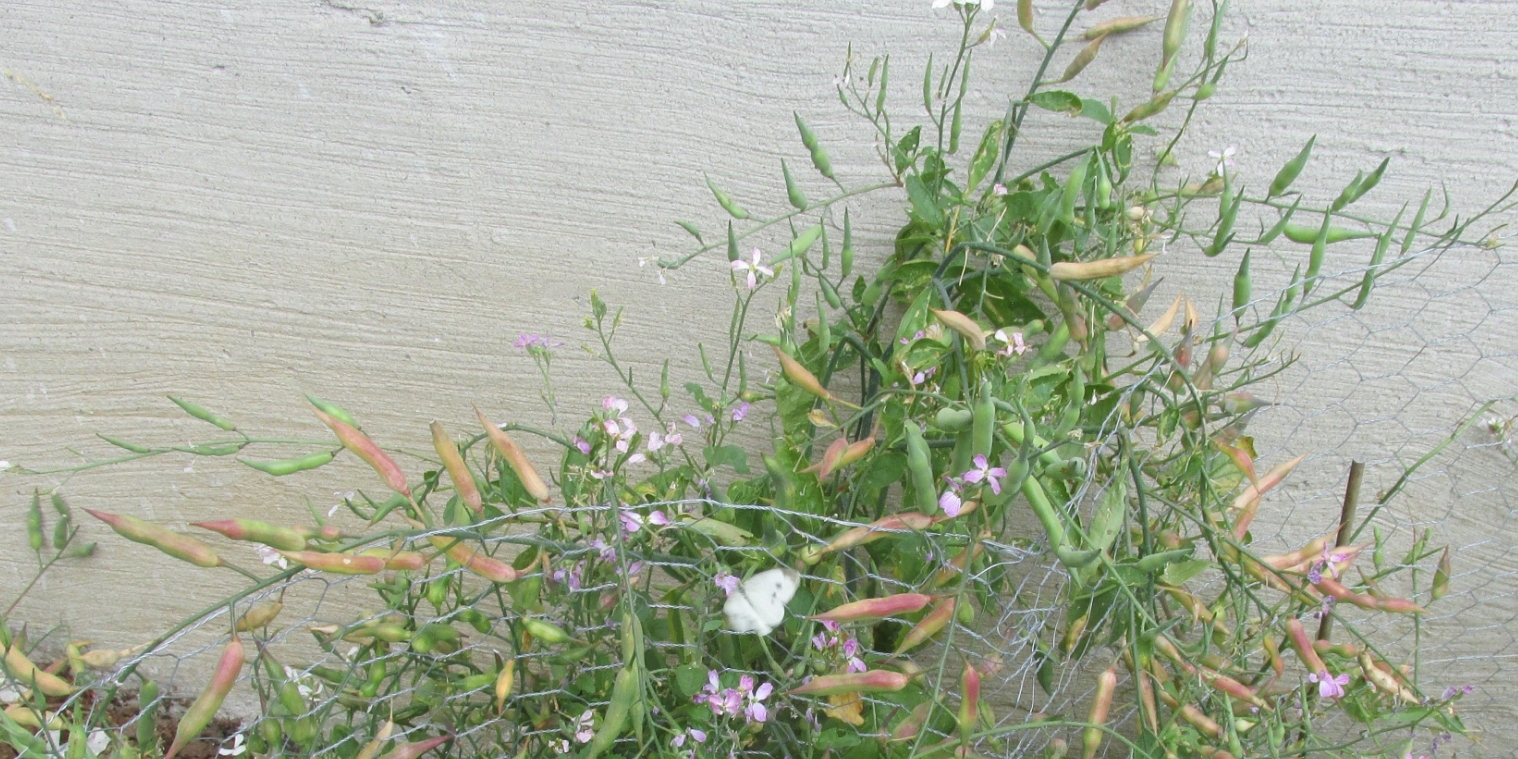
(The radish seeds, contained within these pods, are almost ready to harvest. They merely need to dry a bit.)
I reserve a part of the harvest for the wildlife.
The Mafia Squirrels will steal some cherry tomatoes. The birds will eat some raspberries. The slugs will devour some green beans.
That is the reality of gardening and is a part of the honor of sharing this wonderful planet with other lifeforms.
I also, however, reserve a part of the harvest for seeds.
I allow some plants, like radishes and spinach and others, to flower and then go to seed. This is a long process and I can’t use that garden space for anything else while it is happening.
But it is necessary to ensure there will be a harvest next year.
We saw during the early days of COVID that buying seeds is not always a reliable option. It was almost impossible to find lettuce seeds in my part of the world in 2020, for example.
If times get tough, seeds will be difficult to obtain again.
Plus saved seeds are usually more suited to our particular growing conditions. The plants that survived to give us those seeds thrived in our gardens.
Often, when we save seeds, we end up with WAY more seeds than we could ever possibly use.
I could convert the entire neighborhood to 100% spinach lawns with the seeds I’ve saved.
(grins)
I share my excess seeds with other gardeners in the area. It is an easy and free way to make their lives a little bit happier.
Topics: Gardening | Comments Off on Seed Saving And Sharing
Sharing The Harvest

The harvest from the backyard vegetable garden ramps up during the month of August. The plants are often producing more than the Dear Wonderful Hubby and I can consume.
We freeze much of the excess to enjoy during the winter months.
And we give some vegetables to neighbors.
We do this for a couple reasons.
The Dear Wonderful Hubby and I both love to feed people. It gives us joy. And it is one of our ways of showing love or caring.
We also know our backyard vegetable garden isn’t the prettiest back window view at certain times of year (like early Spring or late Fall/Autumn). It isn’t the perfect lawn many of our neighbors have.
And it sometimes smells. (sheepish grin) Compost can smell. Coffee grounds definitely smell. Aged manure smells.
Our neighbors tolerate that and we thank them by giving them some fresh vegetables.
But, mostly, we are showing them love.
(smiles)
Topics: Gardening | Comments Off on Sharing The Harvest
Nature And Balance

This planet is a wonderful place and when possible, nature likes to keep it in balance.
For example, we had A LOT of caterpillars this year, too much for the plants to handle.
And the plants didn’t have to handle the caterpillars because the hornets and the yellowjackets swooped in. They brought the caterpillars home to their nests to feed their offspring.
The birds, in turn, keep the hornet and yellowjacket population down.
We also had A LOT of pillbugs in our area of the world.
The little brown spiders moved in to keep their population in check.
With the climate changing, the Mafia Squirrels are now having THREE litters of babies every year. (In the past, they would have one litter.)
The hawks and the crows ensure we’re not overrun with squirrels.
This world is an amazing place. The more we learn about how it works, the more amazing it becomes.
(smiles)
Topics: Gardening | Comments Off on Nature And Balance
Are Hydrangeas Easy To Care For?
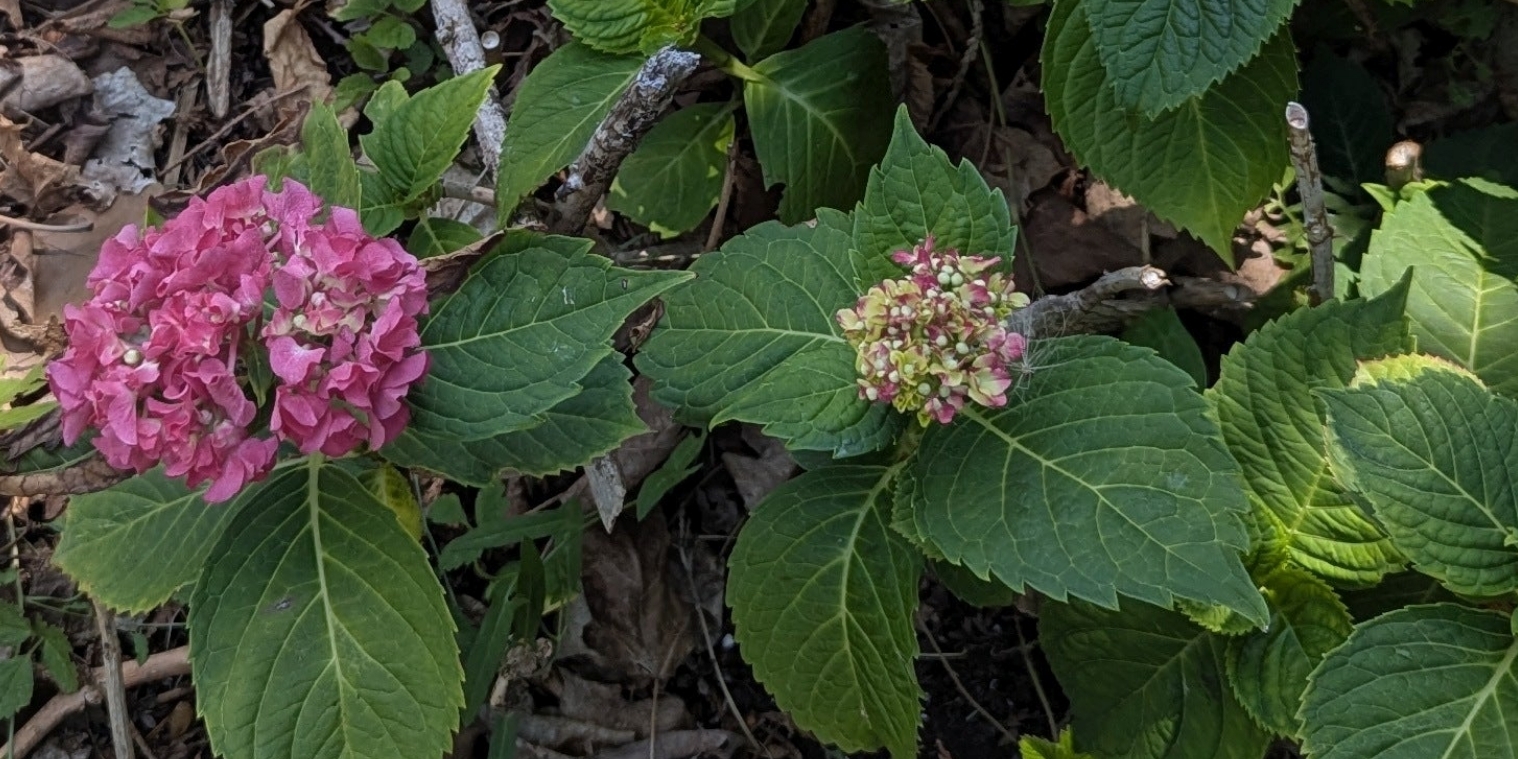
(Our hydrangea on a cloudy day.)
A couple weeks ago, I mentioned that we have a hydrangea in the flower garden and that it is easy to care for.
Many, MANY gardening buddies told me hydrangeas require a lot of work AND a lot of water.
Not the way I grow them.
(sheepish look)
I rarely water our hydrangea. I figure it is a perennial. It has deep roots. It should be okay.
And it HAS been okay.
Is it the best looking hydrangea out there?
No.
But it flowers beautifully every year. Its leaves are green. It survives.
I also don’t fertilize it or otherwise fuss over it.
Plants survive in the wild. They might look fragile but they usually aren’t (Except for cucumbers. If you look at cucumbers wrong, they’ll die – grins).
Often we don’t have to baby them as much as social media gardeners advise us to do.
Topics: Gardening | Comments Off on Are Hydrangeas Easy To Care For?
Every Plant Is Different

Last year, I harvested seeds from the sole zinnia plant that survived to seed stage.
(There was NO cross-pollination.)
I started some of those seeds indoors in the same soil putting them under the same growlight. When they were large enough, I moved them to the same bed, caring for them the same way.
They received the same amount of sunlight and water and nutrients.
One plant didn’t survive. One has SIX flowers. One hasn’t flowered at all. Others have one to four flowers per plant.
The largest plant is as tall as my hips. The shortest surviving one barely reaches my ankles.
And their flowers are a variety of colors (each plant only has one color of blooms, however)!
Plants, like humans and other species, are all different. They grow in their own unique ways at their own unique times.
Yes, we can influence that growth. But we can only help so much.
We care for them and let them do their thing.
And we embrace their differences.
(smiles)
Topics: Gardening | Comments Off on Every Plant Is Different
When In Doubt, Water Your Garden
Rain has been forecast for my corner of the universe every day for the past five days.
That rain never happened.
If I had waited for it, half, if not all of my vegetable garden would be dead.
Thankfully, years ago, a gardening expert told me,
“Don’t water based on hope. Water based on your current situation.”
If it is raining, don’t water. If it has rained sufficiently over night or the day before, etc., don’t water.
If your plants need water today and it isn’t raining, water them.
If it does rain, maybe you won’t need to water tomorrow. And you might be able to fill your rain barrels. That’s awesome.
But if it doesn’t rain, your plants should still be okay.
(smiles)
Topics: Gardening | Comments Off on When In Doubt, Water Your Garden
Changing The Iris Bed
Our backyard is mostly a vegetable garden now. The individual plots are gradually expanding until there will soon only be walkways between them.
I love this!
Tending to that takes time.
So we’re trying to create a fuss-free front yard, filled with small perennial plots.
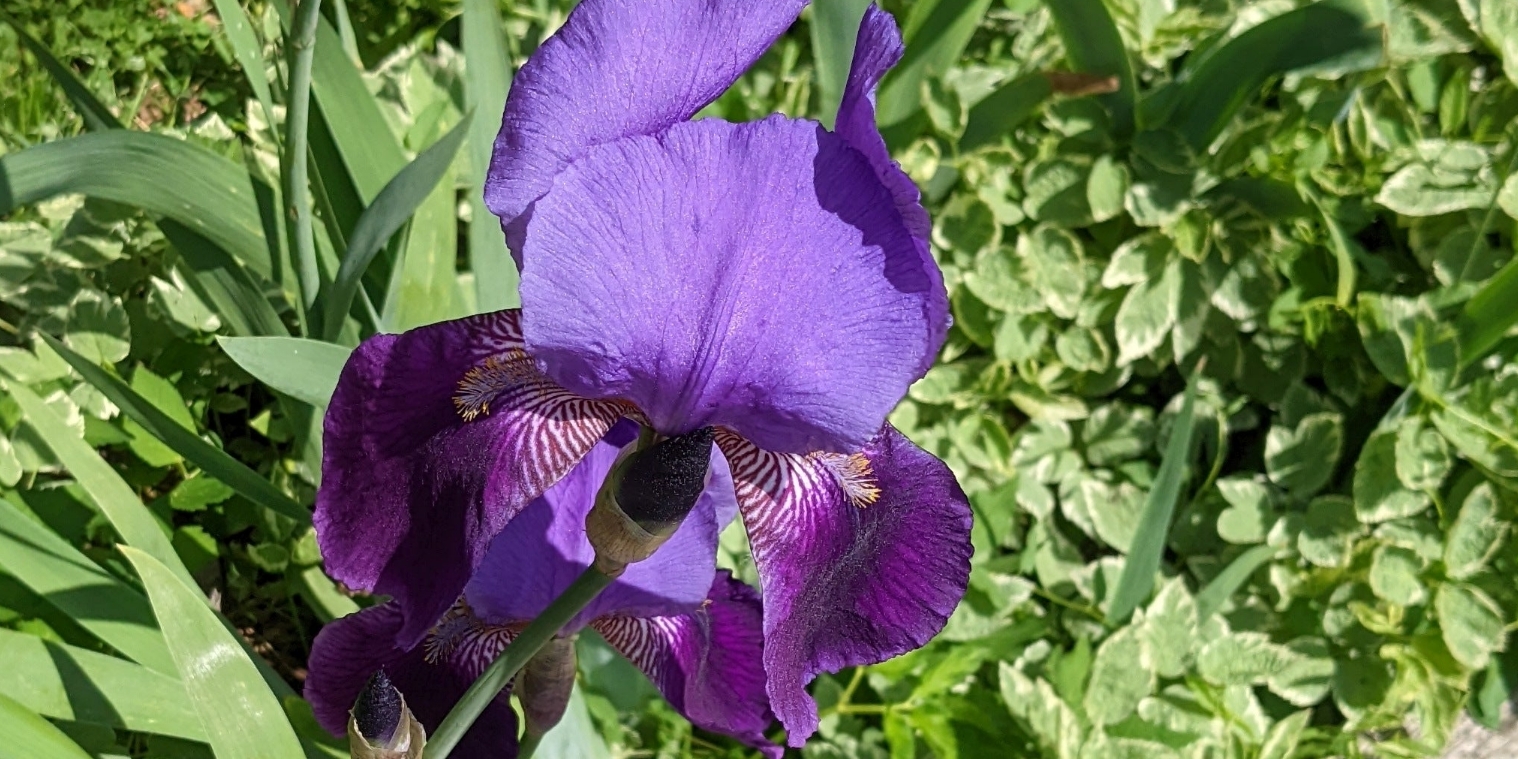
One of those plots is the Purple Iris bed.
I like the greenery of Iris plants so my initial thought was to have it be ALL Irises.
It is very green right now. All green. Too green.
It needs a couple pops of color.
My revised plan is to have one pop of color be a hydrangea we were given when we first moved into the house. That’s a fairly easy-to-care-for later blooming perennial.
Another pop of color will be a cat’s pajamas cat mint we invested in a couple years ago. That’s another easy-to-care-for perennial that blooms all season long.
I need a third easy-to-care-for mid summer+ blooming perennial that overwinters well.
I’m having a lot of fun searching for that perfect plant.
(smiles)
Topics: Gardening | Comments Off on Changing The Iris Bed
Gardens And The Heat

It has been a tad bit warm in my corner of the universe. (grins) Unexpected and/or excessive heat can stress and perhaps even kill plants.
Climate change is very real. The world is getting hotter. It makes sense to prepare for the heat when planting a garden.
Mulch is a must-have. (I spread knee-deep dried leaves on my garden beds every Fall/Autumn for this purpose.) As is other organic materials in the soil. That helps to retain water.
And a mulch regulates temperatures and protects the soil from baking.
Gardeners often say, “Bare soil is death.” Plants die. Microorganisms die. It is rare for there to be any bare soil in nature. And that’s why.
Many plants, like lettuce, only require a few inches of soil. So I fill out containers by putting a layer of partially composed leaves in the bottom, under the soil. This organic material holds onto water, acting like a sponge, allowing the plants to access it later.
On hot, sunny days, I also water deeply in the morning, before the sun shines on the plants. I will turn the hose on, direct it at the base of a plant and count to 20. This water will soak the mulch, which will hold onto the moisture for much of the day.
I create partially shaded areas in the garden. Tomato plants, for example, love sun and (reasonable) heat. They grow tall and shade plants like the heat hating lettuce. The sun and heat loving butternut squash climbs over a frame, shading the more vulnerable plants under it.
During the heat of the day, I try not to disturb the soil. I don’t weed. I don’t plant. I try not to even walk on the pathways.
Any soil that I expose will dry out.
It also stresses the plants. And they are feeling a lot of stress already from the heat and blazing sun. Minimizing additional stress (like from, for example, pruning) might make the difference between life and death.
I DO weed. That’s necessary. But I do that in the morning or in the evening. And, when I can, I chop and drop, leaving the weeds on the ground to decompose. That returns more moisture to the soil.
These are little things but they add up to make a difference!

Topics: Gardening | Comments Off on Gardens And The Heat